

Building with the living world: a new tool to measure biodiversity in commercial property
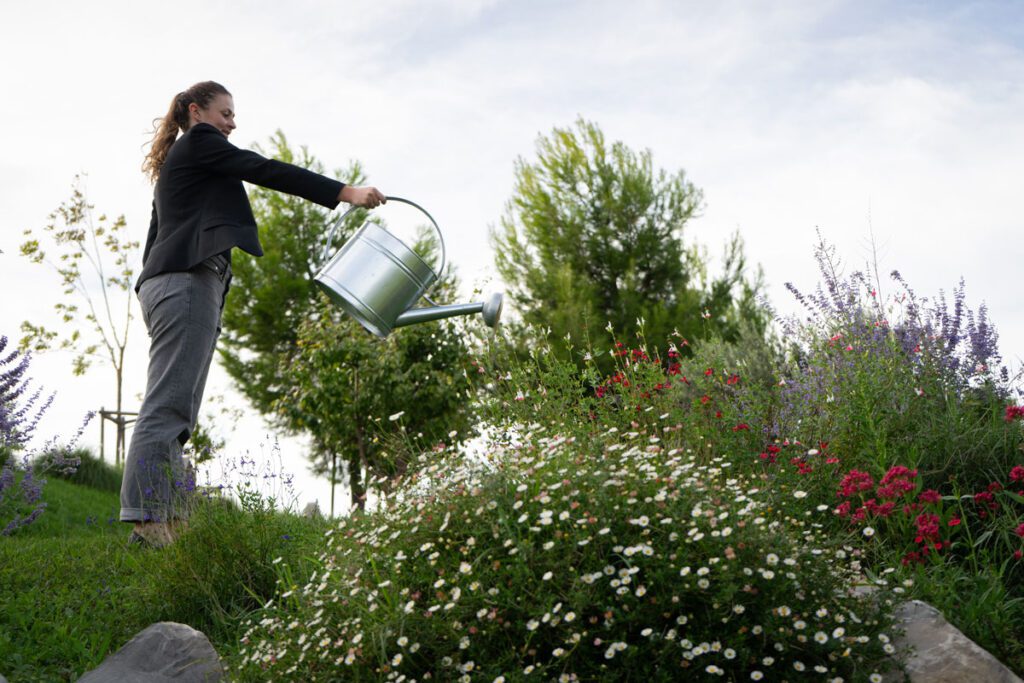
Rethinking nature’s place in the city: GSE’s commitment to urban biodiversity
At a time when environmental degradation and climate change are reaching catastrophic proportions, including the accelerated loss of urban biodiversity, it is imperative that we transform our approach to construction. In this context, tools such as the Biotope Area Factor (BAF) offer ways to limit soil sealing. However, as committed players in the construction industry, we at GSE felt the need to go beyond these approaches to fully integrate wildlife – both animals and plants – into our projects.
With this in mind, we have devised and developed our own biodiversity approach, specifically designed to meet the operational and environmental requirements of real estate construction. Our innovative methodology is designed to combine urban development with respect for nature, in a harmonious and sustainable way.
Why develop our own biodiversity approach?
Giving back to nature – with interest
“We can’t just give back to nature what we’ve taken from it. We need to give it a little extra.”
Anthony Guerard, GSE environmental engineer.
Existing assessment tools, such as the Biotope Area Factor (BAF), have the merit of raising awareness of the importance of green spaces in urban planning. Nevertheless, these tools have limitations, including:
- An overly generic approach,often unsuited to the specific characteristics and practical challenges of some real estate development projects.
- A partial view of ecology,focused mainly on unsealed & planted surface areas, without taking full account of the ecological quality of existing land, habitat diversity or the ecosystem around the building.
- A disconnect from regulatory requirements, limiting their real impact in the design phases.
We wanted to go further by developing a specialised instrument, an effective tool for design –rather than administrative tasks. This new tool brings several benefits:
- Comprehensive & accurate assessment: it measures the ecological quality of a project from all perspectives (sealed surfaces, permeable spaces and green spaces).
- Design input: it promotes the integration and enhancement of biodiversity from the earliest stages of project design.
- Eco-friendly guidance: the tool is designed to guide our clients towards measurable, reproducible and ambitious approaches that help preserve and regenerate biodiversity.
By creating this indicator, we are affirming our commitment to rethinking the way we build, placing wildlife at the heart of our projects. The tool does not simply aim to “offset” or “neutralise” the impact of urbanisation, but to give back to nature more than it has lost.
Anticipating future regulatory requirements, we integrate biodiversity from the earliest design phase. This proactive approach enables us to comply with current & future environmental regulations, while optimising each project’s environmental impact, combining performance and sustainability.
The Blue Suite™: promoting sustainability and biodiversity
“Just because a plot of land is unsealed or planted does not mean it is ecologically rich!”
Anthony Guerard, GSE environmental engineer
To meet these challenges, GSE developed an eco-responsible offering: The Blue Suite™. Starting at the Essential level, it includes each project’s systematic survey by an environmental engineer. This specialist plays a key role in ensuring the accurate assessment and calculation of the variables necessary for a truly sustainable design. The Blue Suite® is therefore a strategic management tool that supports our clients in the development of projects that meet ambitious environmental performance criteria – whether in the logistics, industrial or services sectors.
One of the pillars of this approach is the GSE COMPASS, a visualisation tool that brings together all the solutions selected in terms of energy performance, carbon reduction and biodiversity integration. For this last criterion, the calculation is based on GSE’s biodiversity factor, specially designed by our experts in collaboration with our environmental engineer. By using it from the earliest stages of each project, we guarantee:
- regulatory compliance,and
- a powerful, long-term environmental & social vision
With The Blue Suite™ and COMPASS, we don’t just create buildings. We build projects that anticipate the future, making nature – and its regeneration – a priority from the design stage onwards.
“This enables our clients to understand their future building’s impact on biodiversity and to take action early on in the project: as soon as the site survey has been completed, rather than when the first shovel hits the ground.”
Sabah Gaci, GSE Product Marketing Manager
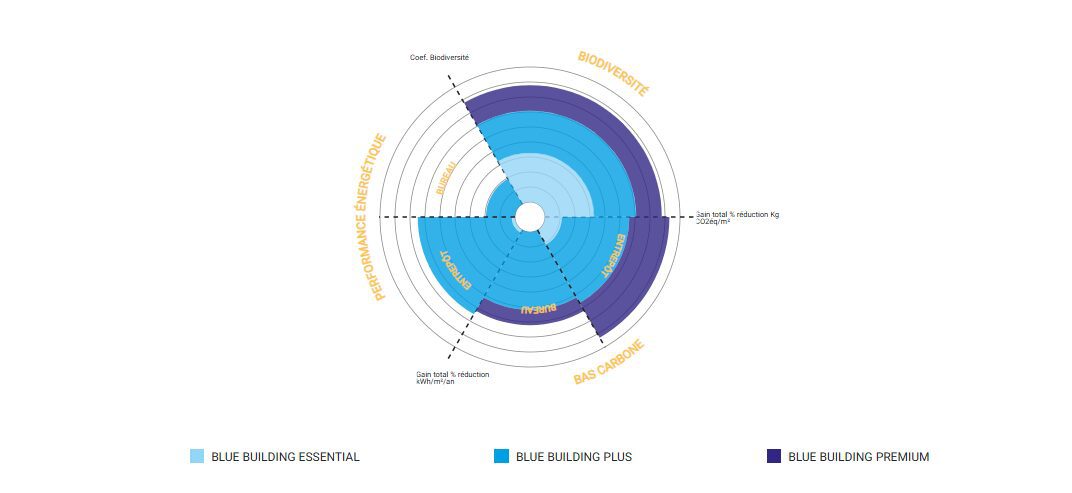
How does GSE’s biodiversity factor work?
An effective, activist approach
Our biodiversity factor is based on a multi-criteria analysis that takes into account each project’s specific characteristics. Its balanced approach takes into account several key variables, including the nature of the site (sealed plots of land, industrial brownfield, agricultural land, natural areas, etc.), the type and plot area of the buildings (logistics, industrial, brownfield redevelopment), and the local environmental context.
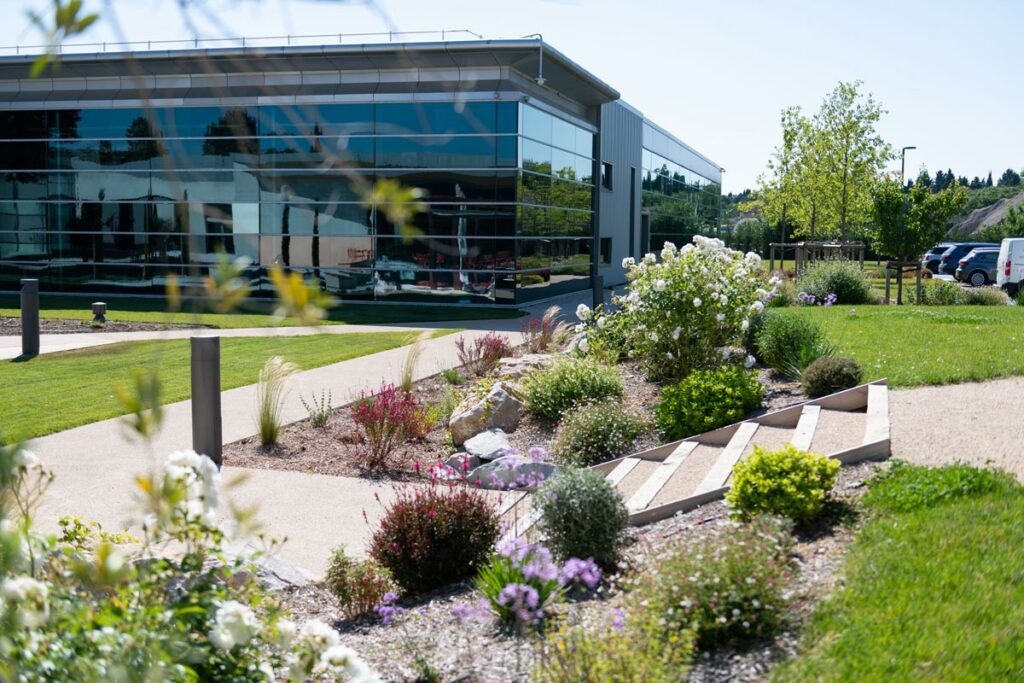
The main criteria taken into account include:
- The project’s actual surface area (in m²), whether natural, agricultural or sealed.
- The creation of hedgerows, calculated in terms of surface area or linear metres included in the project.
- The proportion of green spaces, expressed as a percentage of the total surface area, with an emphasis on the ecological restoration of various natural habitats.
- The actual ecological gain of biodiversity measured within the project’s footprint during the first five years of the project’s operational phase.
Addressing urban planning & environmental impacts: a global analysis
Besides the site itself, our biodiversity factor measures the project’s direct and indirect effects on its surroundings. This is why the choice of location (natural land or transformed site) is decisive and accounts for 50% of the final score.
- Greenfield: a stricter scoring system is applied, as the ecological impacts are often significant and difficult to offset. For example, in cases of destruction of ecologically sensitive areas (areas of high ecological value including wetlands), the GSE COMPASS biodiversity score is automatically penalised, with a definitive fail score of 1 displayed in the project passport. This emphasises that such projects will need to be gradually avoided or abandoned in the future.
- Brownfield: when a project is located in a 100% transformed area (with a significant share of sealed soil), it represents a tremendous opportunity to renature and restore biodiversity, opening the way for substantial ecological gains.
Only projects that obtain a final score of 4/5 or more meet GSE’s values. Such is our commitment to sustainable construction that sets an example in terms of environmental gains. These projects must be widely promoted and generalised.
Differences between GSE’s biodiversity factor and the Biotope Area Factor (BAF)
- A comprehensive and strategic approach: Unlike the BAF, which simply measures sealed and unsealed surfaces, our factor also takes into account the choice of the site. Compliance with environmental regulations (preservation of protected species and wetlands) is an essential prerequisite.
- An in-depth survey: The BAF does not consider the initial state of the site, but merely the share of sealed vs. unsealed areas of the plot. Our tool, on the other hand, integrates the conservation, restoration and ecological enrichment of existing land, going far beyond standard unsealing solutions.
- A focus on renaturation: Our biodiversity factor highlights the ability of projects to generate real ecological gains through renaturation actions adapted to each context. Beyond choosing an anthropised site, this approach promotes ambitious initiatives to recreate viable ecosystems after unsealing the soil – a precondition for receiving the top score of 5/5.
Besides reducing projects’ environmental footprint, our factor rewards the ecological restoration of brownfield land. It takes a long-term perspective, aligned with environmental regulations, assessing projects based on demanding criteria and accurate metrics. Evaluate, challenge and act: these are the principles that underpin our commitment to enhancing biodiversity in each of our projects.
Use case : SNCF Campus Le Mans
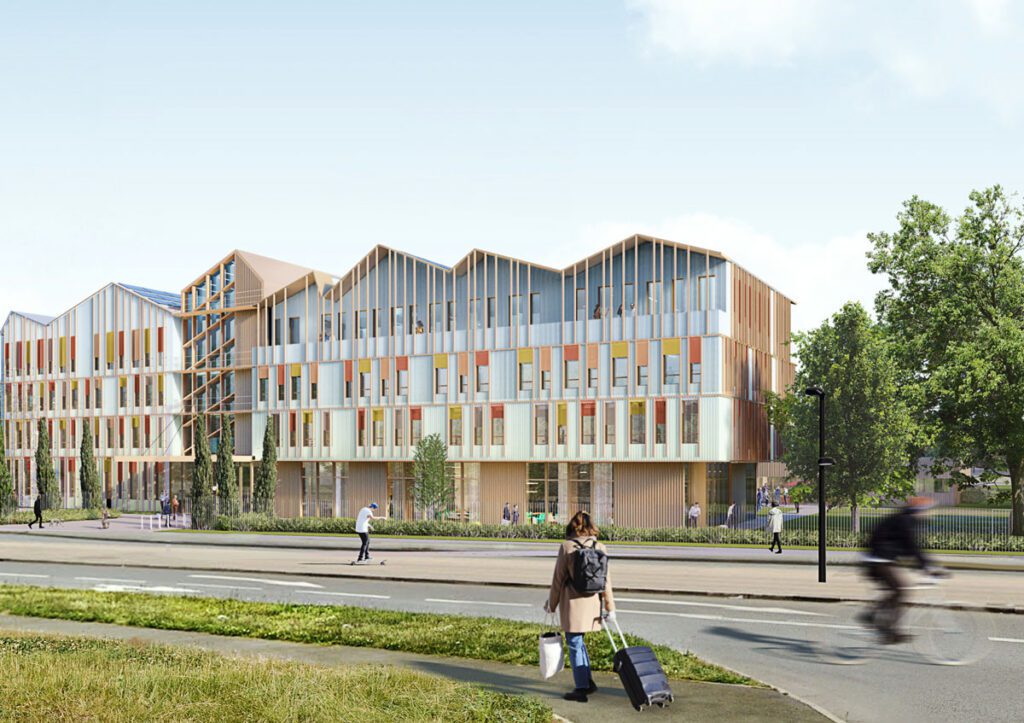
The project received a rating of 4.4, thanks to its location on 100% brownfield land, no damage to protected species or wetlands, and significant opportunities for renaturation to achieve ecological gains.
What are the benefits for commercial real estate?
Our biodiversity factor brings many benefits to commercial real estate, enhancing both the projects’ competitiveness and their harmonious integration into their environment.

Four Parx Hambourg
A strategic asset for calls to tender
GSE’s biodiversity factor increases a project’s overall value by demonstrating a strong commitment to sustainability – a growing requirement in public and private procurement. This higher value strengthens our clients’ positioning while helping them stand out in a competitive market.
Projects more acceptable to stakeholders
Addressing environmental considerations right from the design phase helps to appease local residents and communities, increasing the project’s acceptability. This proactive approach supports project approval and speeds up implementation & deployment.
Long-term environmental compliance
Thanks to a forward-thinking approach, real estate projects designed using our method not only meet current environmental requirements, but are also prepared for future challenges. Whether the vision spans 20 or 60 years, the buildings benefit from long-term sustainability – ready to evolve with new regulations.
CValue creation for the future
Designing buildings to be eco-friendly enhances their intrinsic value. Based on principles of Corporate Social Responsibility (CSR), our projects contribute to a balance between economic performance, social responsibility and respect for the environment. This long-term strategy benefits all stakeholders, while actively contributing to responsible and balanced development.
Integrating biodiversity into commercial real estate is not just a crowd-pleasing gesture. It’s a strategic lever to address the challenges of today and prepare for those of tomorrow – by strengthening the project’s positive impact on ecosystems, businesses, and communities.
Working together for a sustainable future
The success of sustainable real estate projects depends on close collaboration between key players: urban planners, landscape architects, investors, local authorities and many others. Their collective involvement is essential for designing and creating living spaces that are functional, harmonious and environmentally friendly.
However, this approach requires openness to discussion and change. Our biodiversity factor, designed as an operational tool, will evolve over time. But its evolution must be the result of a dialogue between all stakeholders – to ensure its effectiveness and widespread adoption. One key question therefore remains: how can we work together to build an evolving and meaningful framework?
The key idea is simple but crucial: building must no longer mean destroying. Today, there is an urgent need to rethink our design methods, to protect natural habitats and to promote development that fully respects our environmental heritage.
At GSE, we are convinced that construction must integrate biodiversity as a fundamental principle, going beyond mere regulatory obligations. Our biodiversity factor does not replace existing tools such as the BAF, but complements them with a pragmatic, ambitious approach that is adapted to operational realities.
Together, let’s build projects that respect and regenerate life, placing biodiversity at the heart of every decision. The challenge is great, but the benefits for our planet and future generations are worth it.
“To ensure that real estate development and biodiversity can coexist, we need to adapt our approach to design and construction. This is GSE’s ambition, offering you a simple, effective and pragmatic tool that enables us to ask the right questions very early on in the project design phase and then propose solutions that preserve and restore biodiversity, in line with current environmental challenges.”
Céline Fontana, Green Buildings Manager

