
Revolution! The rise of the circular economy promises a sustainable future
GSE’s experts provide dedicated support for your construction project
Ready to build? Get in touch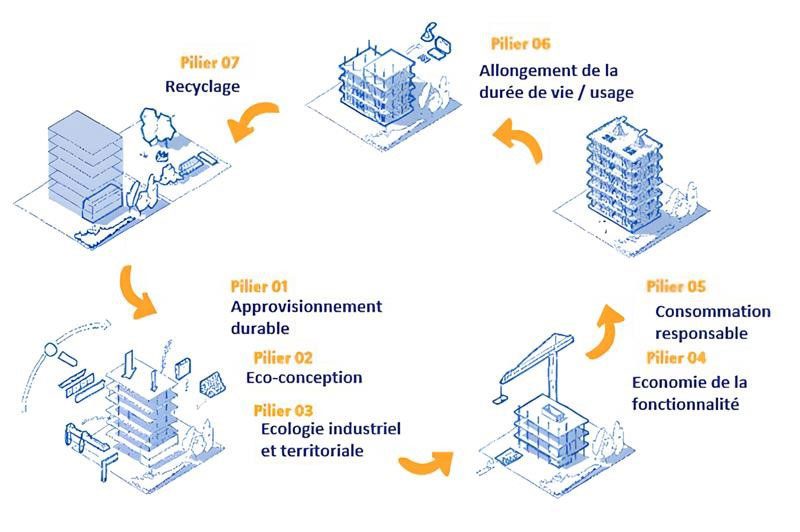
GSE’s expertise
The circular economy is an innovative approach to business that focuses on reducing waste and optimising the use of resources. Unlike the conventional linear economy, based on the extract-transform-consume-dispose system, it encourages a longer lifecycle for products, materials and resources. The circular economy is based on three fundamental principles:
- Reduce waste and pollution at source through prevention
- Keep products and materials in use for as long as possible
- Recycle materials by reintegrating them into the economy
Besides the clear environmental benefits, this approach paves the way for innovations and economic opportunities that create lasting value.

Your project is our project !
Environmental and economic challenges are more pressing than ever. Each new crisis drives home the warning: transform now to become more resilient & frugal – or face the consequences. To this end, the notion of circular economy is vital, guiding our society in its ambitions of (re)industrialisation. In times of uncertainty, it makes us more adaptable and sustainable.
In this context, GSE focuses increasingly on local roots and partnerships. We work with selected players in construction waste reuse – including Cycle-Up, Caprionis and R-Use – that have reconditioning facilities providing extensive regional coverage. These platforms facilitate the relationship between construction companies and suppliers of recycled or second-hand materials. They support the identification, collection and redistribution of reusable building materials, reducing both waste and costs.
In this way, the construction industry is creating a more environmentally friendly future, where recycling & reuse play an essential part in its development.
Shaping the industry of tomorrow: how we get the circular economy rolling
To address the urgent environmental and economic challenges of our times, our industrial system must move away from its inherited linear model. Implementing the circular economy is essential. Our goal is to establish a resource management system that allows for constant reuse, minimising waste and optimising the use of materials.
The circular economy rests on several pillars:
- Eco-design, an approach that focuses on creating products that are durable, repairable, reusable, and recyclable
- Recycling: waste from one process is recovered and becomes the raw material for another, forming closed material cycles
- Green power, which relies on renewable energy sources and minimises the carbon footprint
- Innovation: novel, usage-based business models such as rental and sharing are gradually replacing the traditional ownership-based model.
The circular economy’s benefits
The circular economy’s benefits
In the face of escalating environmental concerns, some measures are vital for a sustainable future:
- Optimised waste management: GSE is committed to minimising construction and demolition waste, limiting its accumulation in landfills.
- Resource conservation: through more efficient use of materials (green design, reuse where possible, etc.), we minimise the extraction of natural resources.
- Carbon footprint reduction: by prioritising the use of reused/recycled materials sourced from local suppliers and improving our performance, we reduce our CO2 emissions.
- Cost minimisation: our improved resource management and green construction practices help reduce long-term operating costs.
- Job creation: the emergence of the circular economy and the growth of new lines of business are creating jobs – such as re-use suitability assessor and re-use project management assistant. These new professions are most active in renovation and demolition waste management, sectors that directly benefit from this economic momentum.
Your project completed in two stages

Examples of GSE’s technical solutions to reduce waste
Here are some examples of technical solutions implemented within GSE aimed at reducing waste:
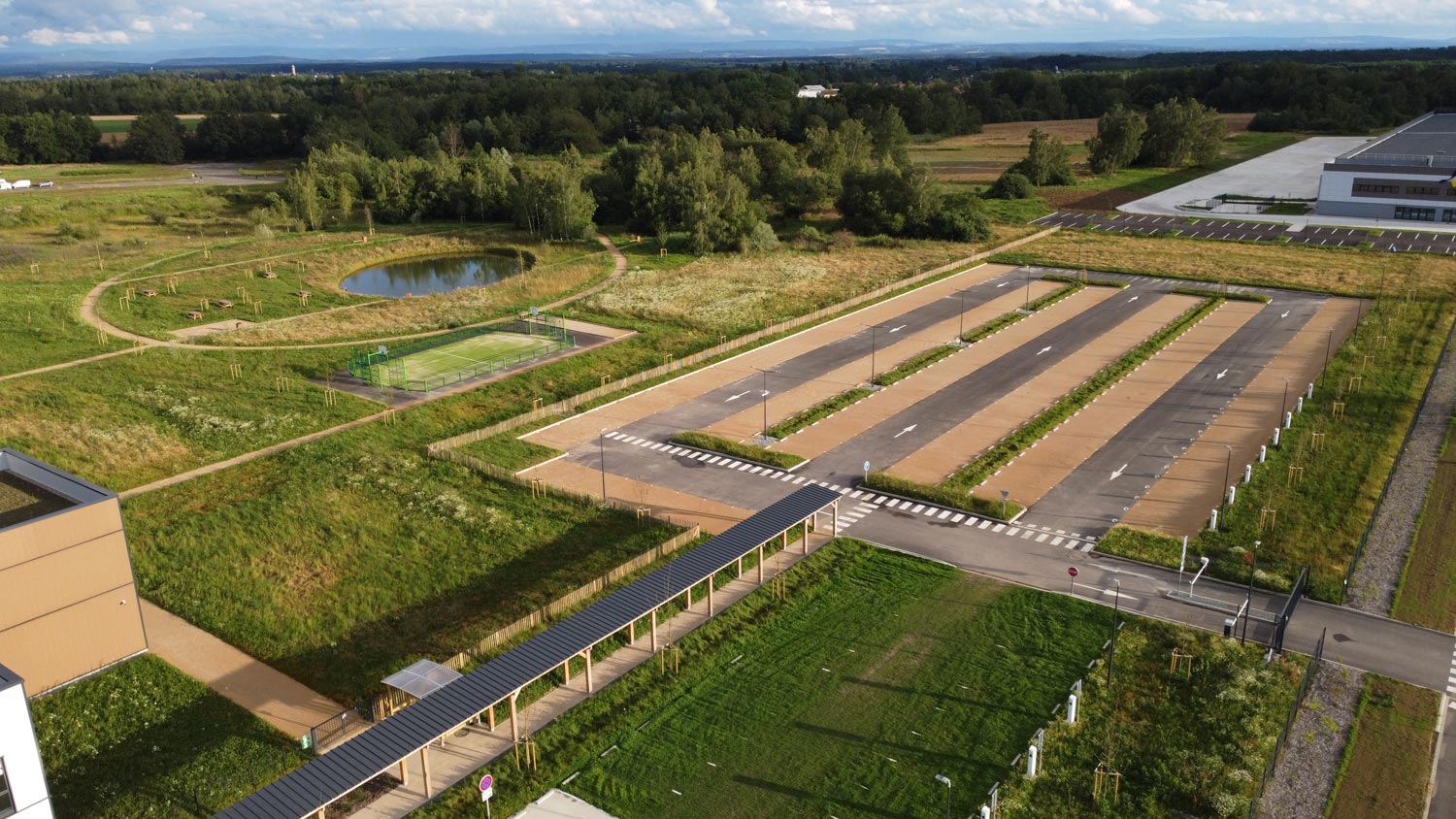
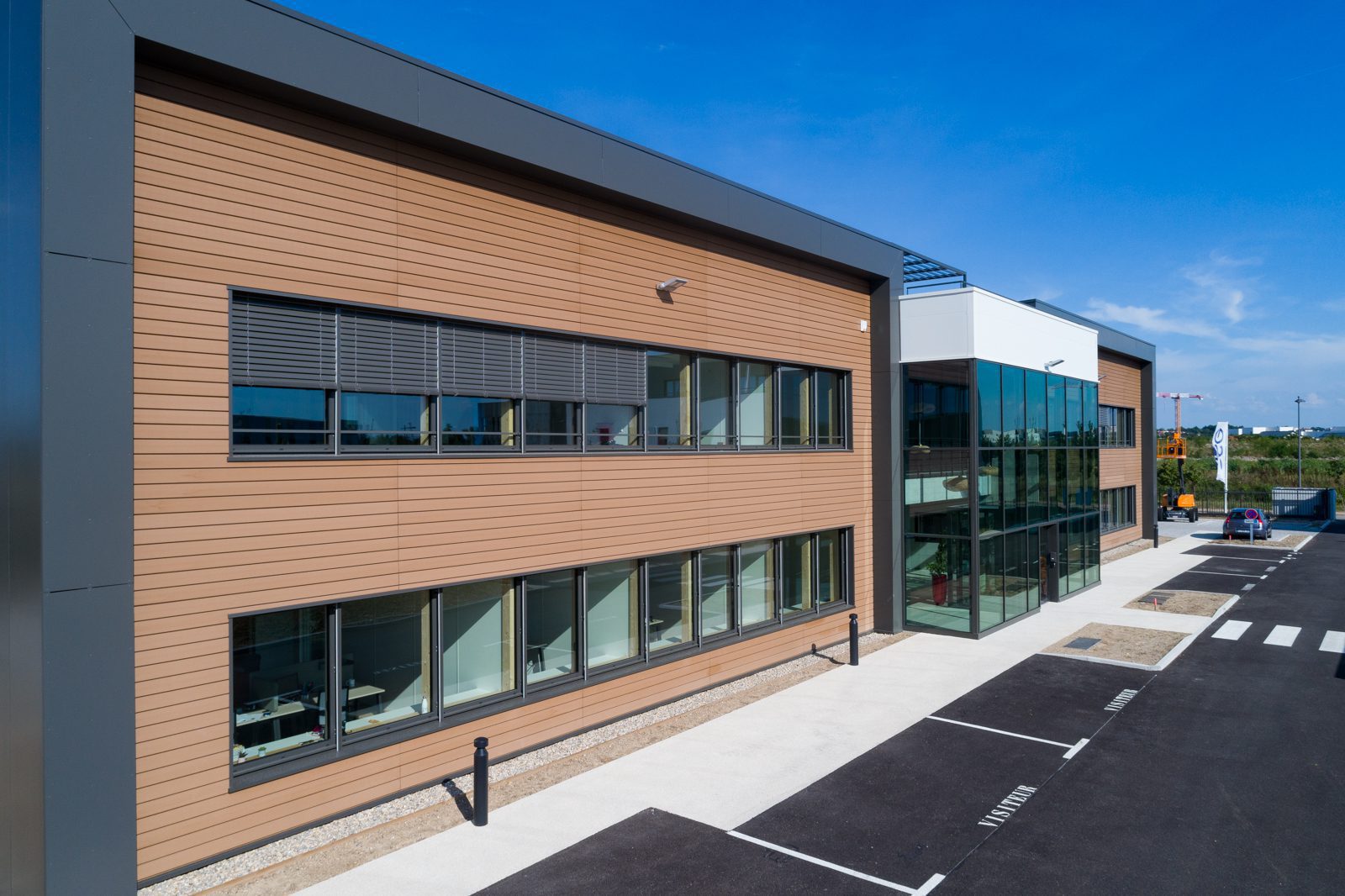
IMMASET PIPA in Saint Vulbas near Lyon :
- BBCA’s low-carbon label
- The Circolab label
- Cerema’s 2EC label
- Afnor’s circular economy evaluation
- Socotec’s ecocycle label
Our expert testifies

GSE is transforming itself by becoming a mission-driven company. This translates into various operational commitments, including the integration of the pillars of the circular economy into our processes and buildings. Several projects already incorporate reused elements.


Foire aux questions
The circular economy is a sustainable development model that maximises resource efficiency. In real estate, it minimises buildings’ environmental footprint – from design to demolition. Its key principles are waste reduction & reuse, leading to a smaller environmental impact.
A Life Cycle Assessment (LCA) is a comprehensive method to evaluate the potential environmental impacts of a product throughout its entire lifecycle. This tool uses a wide range of ecological criteria to produce an accurate assessment, which is based either on standardised national environmental data or declaration forms using the ISO14025 standard – providing specific details on the products used during the construction phase.
Building Information Modeling (BIM) creates detailed digital representations of future buildings. This simplifies the planning, design, and management of construction projects. Thanks to BIM, we can anticipate and minimise construction waste, improve the use of materials, and plan for the recovery of components for post-demolition reuse.
Bâtiment Bas Carbone (BBCA) is a French label that rewards buildings for their carbon reduction performance. It recognises buildings that minimise – including in their demolition phase – their carbon impact, sequester carbon and promote the reuse of materials.
Reflecting their environmental commitment, some of our clients have included initiatives – such as collaborative vegetable gardens – on their company premises. These green spaces offer employees the opportunity to grow their own vegetables and fruit, which helps reduce food waste and builds relations between employees. Other initiatives encourage usage-based business models: for example, employees contribute financially to bike-sharing or car-sharing schemes, reducing the need to purchase personal vehicles. Also, to make buildings greener, we integrate rainwater collection systems, reusing a vital natural resource.
As part of our commitment to fulfilling our sustainability mission, GSE has expanded its Green Buildings team, which now comprises more than 80 specialists. Our goal is to provide you with effective strategies aimed at significantly reducing your buildings’ environmental footprint.
An eco-responsible project ?

Join us
GSE is recruiting!
Check out our vacancies and internships

Have a project?
Do you need to build or renovate
a commercial building?
Contact us