

Parking in the sustainable city: a strategic challenge for urban planning
Today’s car parks exist in a complex urban and regulatory environment. Policy-makers are restricting greenfield construction, infill development is accelerating and the shortage of land is becoming a major challenge. While car parks were long regarded as purely functional infrastructures, they are increasingly seen as a key driver for rethinking and redeveloping the urban space.
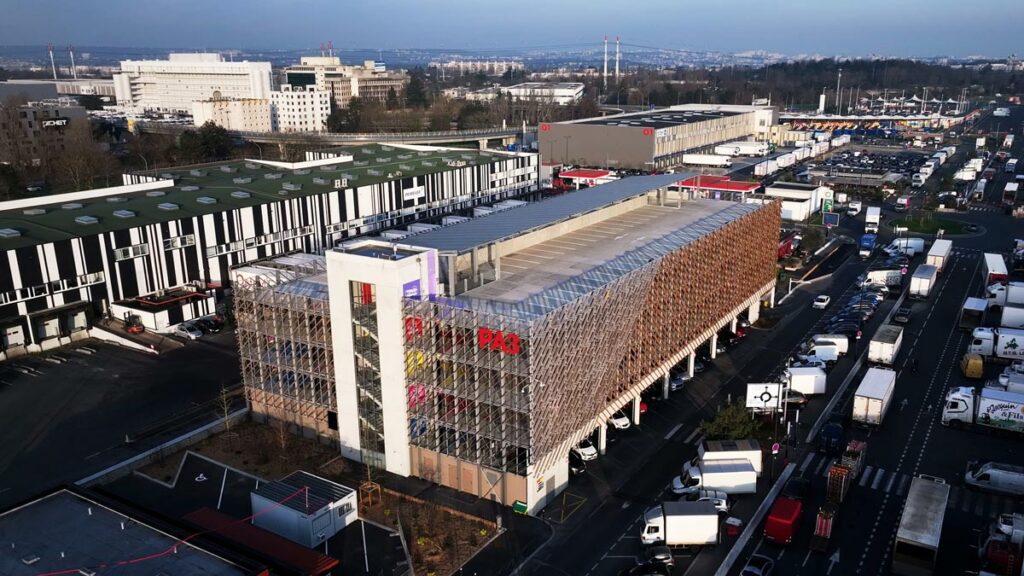
Car parks: a strategic tool for urban planning
Parking’s key role in local development
Car parks are essential to mobility and to the optimisation of public space. And beyond this primary function, they are strategic assets for local communities, their economies and daily lives. Architecture, social acceptability and overall user-friendliness have become key priorities in their design.
Poor positioning or inferior architectural integration can disrupt the harmony of the urban fabric. On the other hand, a well-designed, seamlessly integrated car park can revitalise & beautify the surrounding area. Today, this new perspective has turned car parks into architectural features in their own right.
Car parks for contemporary mobility
Responding to changing travel habits
Urban life is changing rapidly with the rise of cycling, the growing popularity of carsharing & carpooling, the expansion of public transport networks and the electrification of the vehicle fleet. In this context, car parks are no longer just about parking spaces.
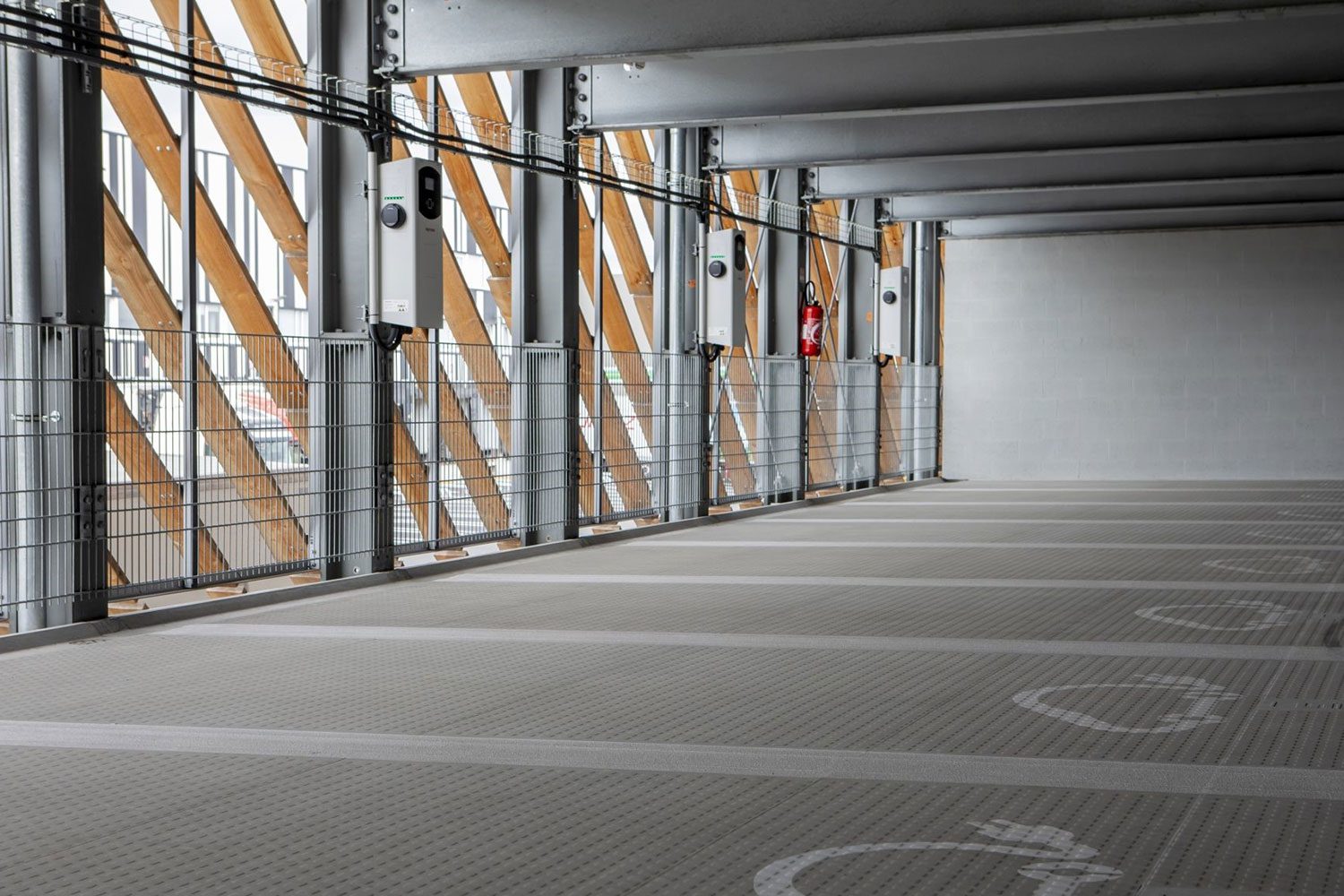
Today’s car parks must incorporate modern facilities such as charging points for EVs, secure storage for bicycles, areas dedicated to carpooling & carsharing, as well as infrastructures to facilitate intermodal travel.
Addressing electric mobility
By 2030, more than 30% of vehicles on the roads of Europe could be electric. Car parks must take this transition into account right from the design stage. Indeed, they act as the connection point between various modes of transport and determine the quality of the user experience.
Greener parking
Supporting local authorities’ environmental goals
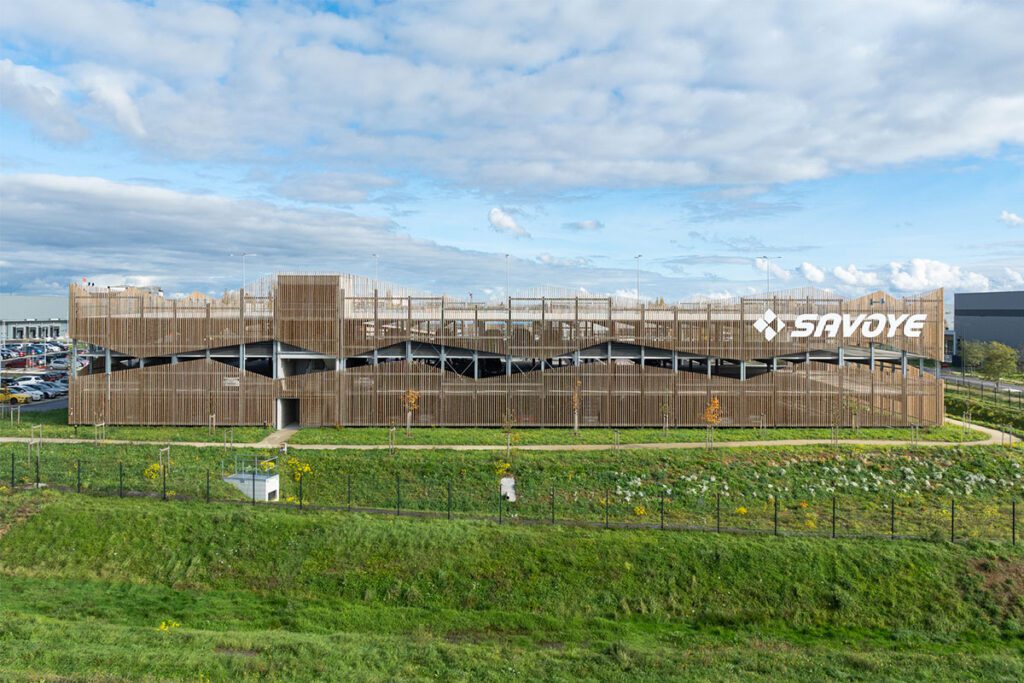
To minimise land sealing, we must rethink the design and location of every piece of infrastructure. A good car park can support a genuinely sustainable strategy and help to:
- Limit urban sprawl thanks to multistorey and underground car parks
- Manage stormwater using appropriate systems
- Generate green energy with solar canopies
- Improve the thermal comfort of public spaces
According to French environmental agency ADEME, photovoltaic panels on car parks are a key driver for accelerating the energy transition in local areas.
Multifunctional equipment
A modern car park is more than a place to leave your wheels. It’s also a multifunctional space that can generate energy, protect natural resources and minimise the environmental impact of urban development.
Optimising land use: a major challenge for local authorities
A strategic resource in urban areas
Given the scarcity of empty plots of land in town centres and suburban areas, local authorities must balance various priorities, including offering enough parking space, creating high-quality public spaces, supporting the local economy and preserving natural areas.
Multistorey efficiency
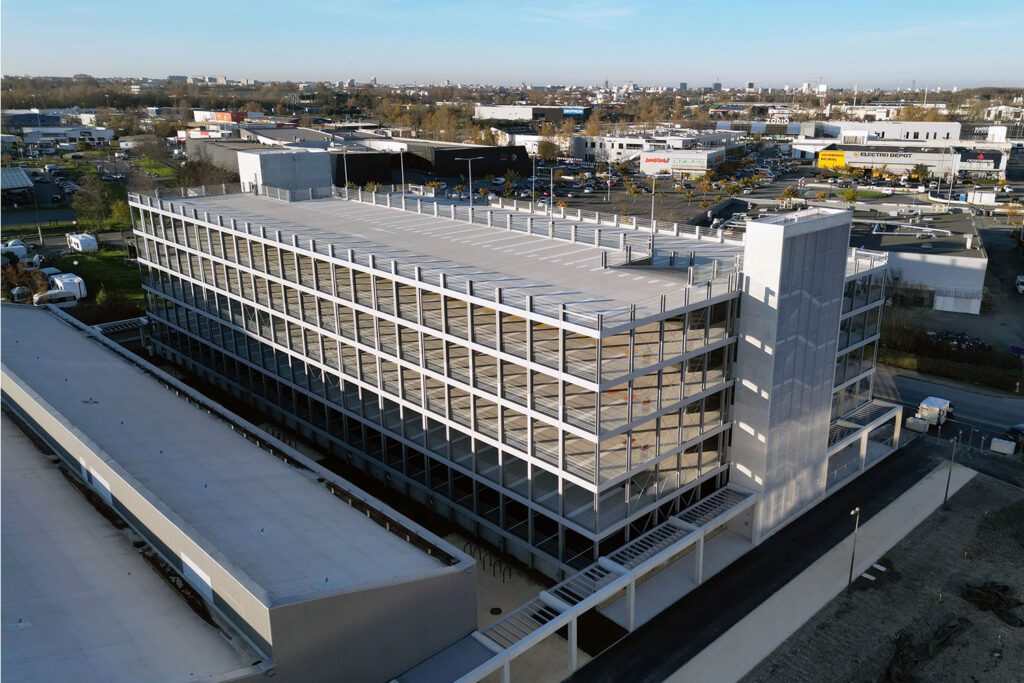
Multistorey car parks are an effective solution: they increase parking capacity three- to five-fold on the same footprint. This frees up space for other uses: parks, housing, shops and public infrastructure.
Such a car park optimises land use and enhances the value of the local area.
Designing today the infrastructure of tomorrow
A forward-looking vision
The car parks we design today must be able to adapt to changing lifestyles and to shared mobility. Anticipating the rise of electric vehicles and taking future changes into account will ensure the sustainability of a public investment.
Flexible design for resilient communities
A proactive, adaptable approach enables us to take into account future needs. This flexibility optimises the sustainability and relevance of infrastructures in a constantly changing urban environment.
Keeping it under control
Simpler management of development projects
Projects led by local authorities involve many stakeholders and require strict control over costs, schedules and urban integration. A design & build approach simplifies the process by reducing the number of interfaces between stakeholders, ensuring better control over budgets and deadlines – and guaranteeing consistency between policy objectives and implementation.
According to multiple studies of the construction sector, rigorous planning from the earliest stages can significantly reduce the risk of schedule overruns and improve projects’ overall performance.
GSE, your car park partner
With more than 1,400 car parks built, GSE draws on its extensive expertise to support local authorities in the design & build of car parks tailored to their specific mobility, environmental and development goals.
Rethinking car parks for the green city
As cities transform to accommodate new lifestyles and transport patterns, car parks have become more than straightforward technical infrastructures. They are urban planning assets that play an active role in addressing several strategic challenges:
- Improving mobility
- Optimising land use
- Supporting the ecological transition
- Enhancing the region’s appeal.
Rethinking car parks means helping to build resilient, sustainable cities tailored to the needs of their residents.
Frequently Asked Questions
The types of car parks include:
-Multistorey car parks: make the most of space thanks to their tall structures, making them perfect for dense urban areas
-Underground car parks: ideal for preserving the landscape and freeing up surface areas for other uses
-Open-air car parks: cost-effective and practical, often built in suburban or industrial areas
- Mixed-use car parks: multifunctional facilities combining parking with commercial or logistics activities
Each solution is tailored to a region’s specific needs in terms of mobility, population density and level of urbanisation. Drawing on its expertise, GSE supports local authorities in the design, construction and even strategic planning of the type of car park best suited to their communities.
To design a suitable car park, the following must be taken into account:
-Accessibility: proximity to major transport routes, public transport and intermodal hubs
-Urban integration: harmony with the surrounding architecture and neighbouring public spaces
-Land-use optimisation: efficient use of space, avoiding urban sprawl
-User needs: facilities for electric vehicles, secure cycle parking, and carsharing
-Environmental impact: stormwater management, permeable paving and green areas
With its turnkey approach, GSE supports local authorities at every stage, offering them solutions that are perfectly tailored to their needs.
A turnkey car park is a comprehensive solution where GSE manages every stage of the project – from design to handover. This includes:
-Preliminary surveys (land use, transport, environment)
-Architectural and urban design in keeping with the local area
-Construction and coordination of works
-Installation of modern facilities, such as charging points and cycle parking
This approach simplifies project management and ensures that the facilities are ready for use and meet the needs of local authorities and users.
Here are some key solutions to minimise a car park’s impact:
-Limiting land take: multiple storeys or underground parking reduce the footprint
-Using environmentally friendly solutions: permeable surfacing, solar shading
-Generating renewable energy: thanks to solar panels or integrated energy infrastructures
These innovative solutions offer local authorities the opportunity to play a major role in the green transition. Drawing on its expertise, GSE helps local authorities build sustainable car parks that are fully in line with their environmental ambitions.
Local authorities can modernise their parking facilities to meet current & future needs, in particular by adding:
-Charging points to meet the growing demand for electric vehicles
-Secure areas for bicycles & scooters to encourage soft mobility
-Areas reserved for carpooling & carsharing, to reduce dependence on private cars
-An intermodal design with seamless connections to nearby public transport
GSE offers solutions tailored to these new requirements, ensuring that car parks are resilient and scalable.
GSE is a trusted partner for car park projects thanks to:
-Proven expertise: extensive experience in design & build, with over 1,400 car parks built over the last 30 years
-Integrated approach: turnkey design & build, simplifying project management
-Environmental commitment: sustainable solutions, integrated into the ecological transition of local areas
-Cost & schedule control: optimised construction sites to prevent budget creep and delays
With GSE, local authorities benefit from a single point of contact that combines innovation, technical expertise and environmental commitment – to deliver sustainable, functional projects.

