


Logistics facilities reimagined for the home improvement sector
The huge supply chain serving Do-It-Yourself retailers
Behind every renovation and construction project, every interior design, every shelf installed lies a mighty and precise industrial system. The home improvement sector relies on a massive supply chain capable of moving millions of SKUs to meet everyday needs.
Let’s focus on a single figure: 50,000 m². That’s the floor area that a single DIY logistics warehouse easily exceeds.
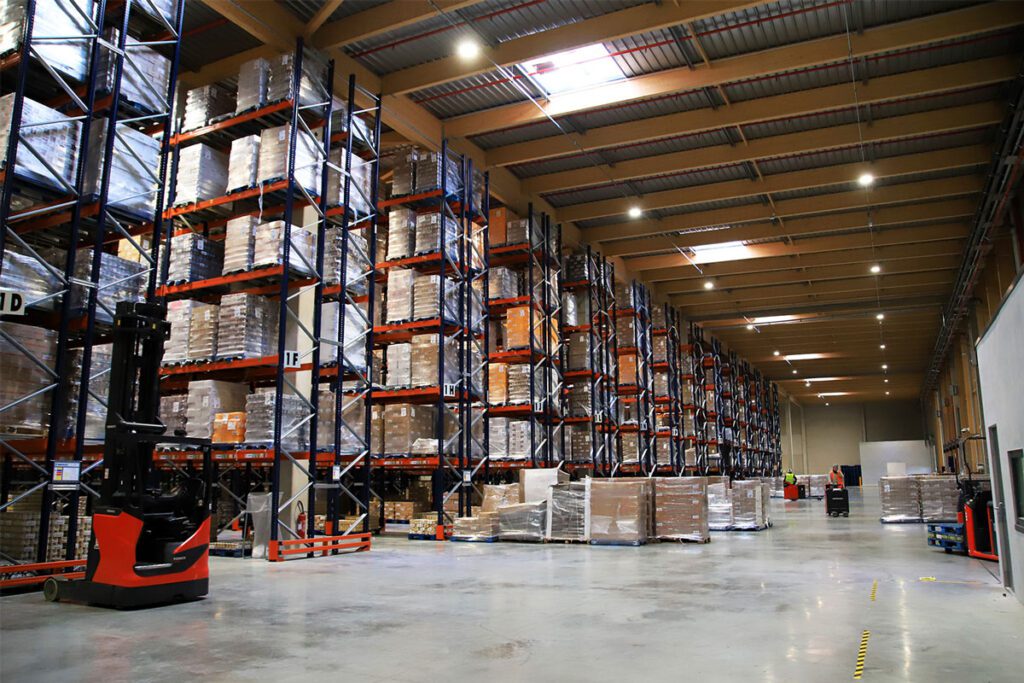
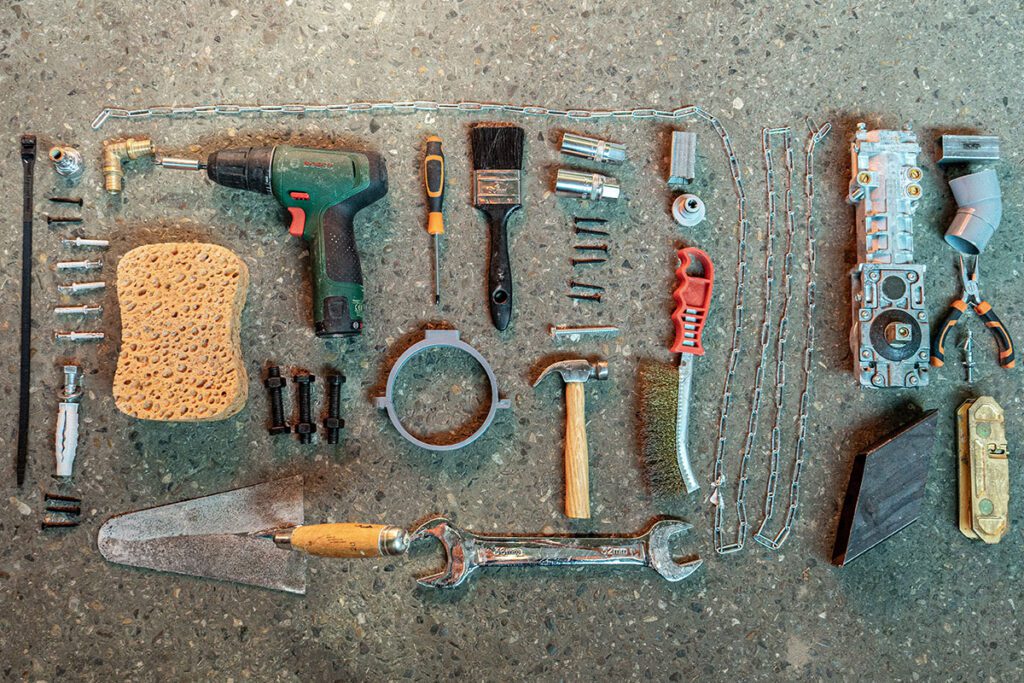
Every screw, tool and piece of lumber is stored on thousands of linear meters (LM) of storage space. The logistics flows are very complex and require high-performance buildings to optimise the procurement, order fulfilment and distribution of goods.
As a general contractor, GSE’s role is no longer just to build large buildings. In the face of global warming, operational efficiency must now go hand in hand with ambitious environmental commitments – particularly in terms of decarbonation. Building well today means laying the foundation for a future that combines economic performance and environment responsibility.
Building high: the solution to land shortage for the logistics sector
Land-use optimisation in the era of net zero land take
Creating buildings with 50,000 m² footprints is a challenge, particularly in the context of anti-urban sprawl policies. The solution? Building upwards to maximise the use of every square metre.
The benefits of the vertical approach
- Brownfield redevelopment: GSE and subsidiary Confluence help Clients identify previously developed land (former industrial sites, disused car parks, etc.) with a view to its sustainable regeneration. Transforming these sites reduces the use of natural habitats or farmland. It also makes use of existing infrastructures (electricity networks, roads, railway lines, etc.), optimising costs and delivery times.
- Going up to go green: multistorey construction on degraded sites maximises storage capacity per square metre of land. Doubling the height of a building halves the pressure exerted on the living soil, while creating opportunities for renaturation in the surrounding area.
An example from GSE
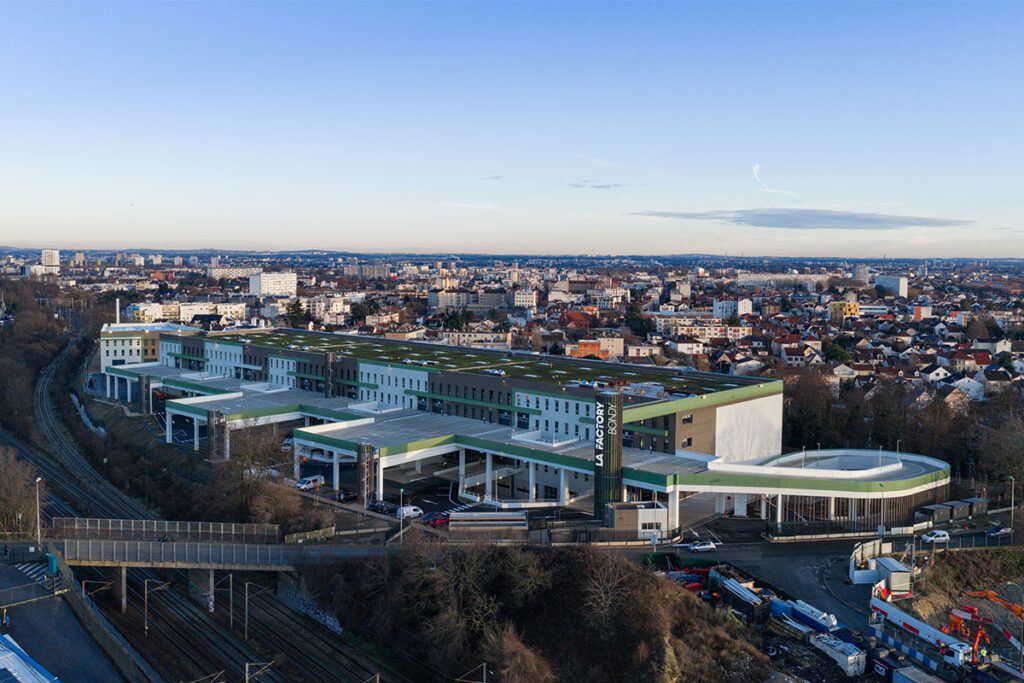
This vertical engineering approach has already proven its worth on major multi-level platforms in Gennevilliers, Augny, Hamburg, and Bondy.
When environmental considerations shape investment decisions
Soil: an ecosystem to be preserved
The soil is not just a place to put buildings. It’s a vital ecosystem, home to more than 50% of the world’s biodiversity. It can store up to 30 tonnes of carbon per acre. Building with respect for this natural environment begins with taking this issue into account right from the design stage.

Three key steps to de-risk projects:
- Detailed ecological surveys: over the course of a whole year, an environmental engineer analyses the site’s biological cycles to identify all the wildlife (e.g. elusive orchids and nocturnal bats).
- Adjusted schedule: based on this survey, the works schedule is adapted to minimise the impact on nature, for example by avoiding disruptive operations during the birds’ nesting season.
- Protection of wetlands: wetlands, which act as natural defences against flooding, are designated as protected areas to preserve vital ecosystem services. This avoids costly compensation payments of up to 300% over periods ranging from 10 to 99 years.
Future-ready logistics facilities
Responsible assets for sustainable performance
Biodiversity and environmental requirements are not just regulatory constraints to be endured. They drive the performance and sustainability that help safeguard your property assets. In the face of environmental challenges, building the back-end infrastructure of the DIY sector can no longer be limited to simply creating massive logistics facilities. It involves:
- Combining high-tech logistics with the circular economy through the regeneration of degraded land.
- Building upwards to reduce pressure on natural land.
- Respecting ecosystems, by treating the protection of biodiversity as a strategic asset rather than a constraint.
COSTCO: A New Generation of Renovation
This transformation of a derelict commercial site into a modern, multi-purpose space exemplifies GSE’s ambitious approach. Far more than a simple storage facility, the site now hosts an innovative concept that combines retail space, an optician’s, a restaurant, a petrol station and a range of services that offer users an enhanced experience.
To achieve this transformation, GSE carried out a major refurbishment over 26,000 m², including internal demolition, the renovation of technical installations and bringing the building into compliance with international standards, notably those of COSTCO, while three shops were operating the whole time in the adjoining shopping arcade. GSE also modernised the car park and outdoor areas. The works optimised the spaces by adapting pedestrian flow patterns, installing storage racks and carrying out structural repairs.
Focused on sustainability, the project breathes new life into a neglected site and addresses current challenges in logistics and retail.
A Long-Term Vision for the Home Improvement Industry
DIY is, by its very nature, the art of carefully repairing, improving and shaping one’s surroundings. Applied on a macro-logistical scale, this philosophy takes on a crucial environmental and strategic dimension. Building the infrastructure behind this sector is no longer simply a matter of stacking cubic metres beneath a concrete envelope: it involves designing a holistic, sustainable and resilient infrastructure. By combining cutting-edge technology, land redevelopment and ecological intelligence, GSE is proving that innovation, respect for the environment and financial performance can go hand in hand.

