


Construction site safety: a top priority for prevention and protection
A compulsory safety induction for workers & visitors
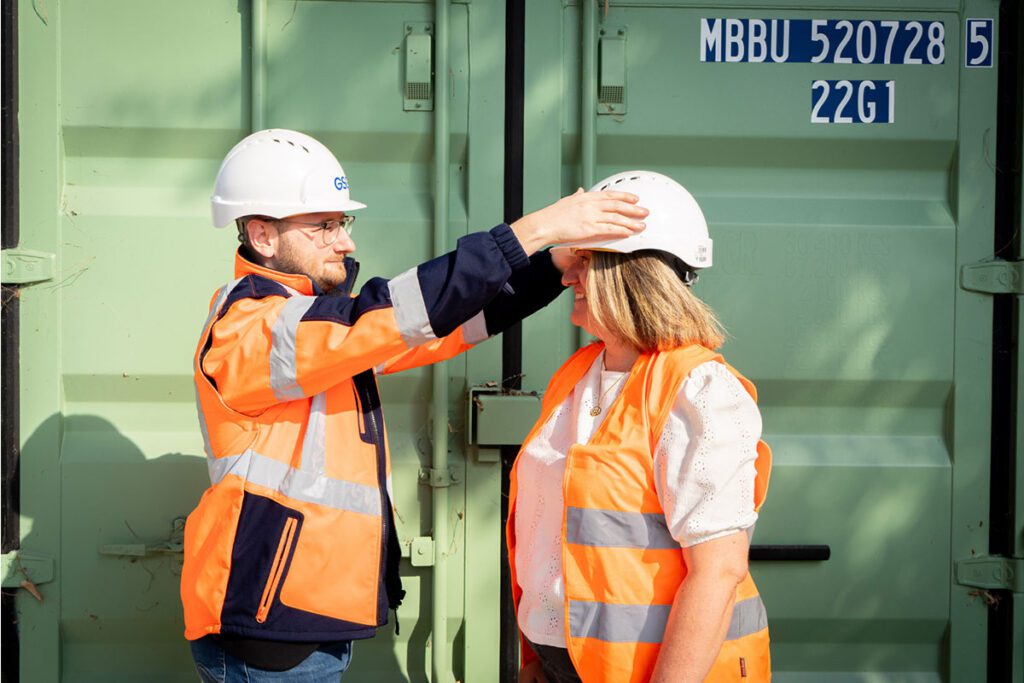
Regulatory compliance
In EU countries, regulations require a formal safety induction for everyone who is new to a construction site. This mandatory procedure applies to employees, subcontractors and visitors alike.
Rules adapted to each site’s specifics
Every construction site has its own requirements, its own unique organisation and its own specific risks. The safety induction enables us to outline the hazards specific to the site, set out the preventive measures in place and explain the required behaviour.
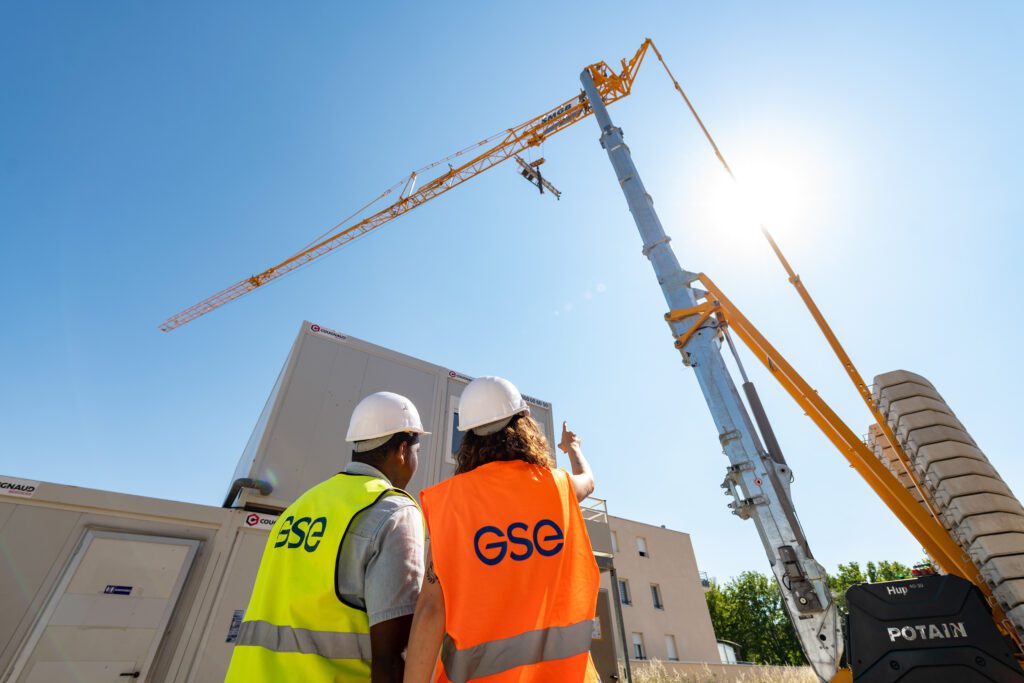
Who is responsible?
Safety training & induction can be supervised by:
- the site manager
- the project manager
- the health & safety coordinator.
These managers ensure that all instructions are fully understood and strictly adhered to.
Why safety is essential on construction sites
A moral responsibility towards workers and users
Safety is not merely a regulatory obligation. It is – above all – a moral responsibility, whether the persons on site are operational staff, maintenance teams or just someone using the car park. Putting in place safe and appropriate facilities helps to protect people, prevent injuries and demonstrate a genuine commitment to everyone’s wellbeing.
A legal obligation
Local authorities and infrastructure managers have the legal obligation to identify & mitigate foreseeable risks associated with their facilities. Safety regulations require the implementation of appropriate preventive measures to protect users and workers. Failure to comply with these obligations may result in penalties, substantial fines, or even hold decision-makers accountable in the event of an accident.
A major financial issue
Beyond the human and regulatory aspects, an accident also entails significant costs. Direct expenses may include repairs, compensation and potential financial penalties. Added to these are indirect costs, which can be considerably higher: service disruption, loss of productivity, damage to the organisation’s reputation, or an increase in insurance premiums. Investing in prevention and safety therefore helps to reduce risks, while safeguarding infrastructures’ financial & operational performance.
Safety induction on our construction sites: a vital step in accident prevention
GSE Makes Safety a Driver of Performance with Its VMC / Vademecum
A proprietary, people-centric, and scalable system designed to support projects and Clients
In the construction industry, health and safety are not merely obligations. They have become essential factors in project control, quality, and performance. At GSE, this conviction translates into a clear policy: placing safety at the heart of the company’s strategy, with an ambition structured around the goal of zero accidents. This approach is presented not only as a moral obligation but also as a driver of performance and operational control.
The VMC / Vademecum guide forms the backbone of GSE’s safety system. It brings together procedures, forms, work permits, workplace risk assessments, reporting tools, and management systems for high-risk activities. Its goal is simple: to make safety clear, actionable, and verifiable on-site.
But safety does not rely solely on procedures. It relies first and foremost on people. At GSE, the safety culture is built on visible leadership, safety walks, daily briefings, the authority to halt work, behavioral observations, open communication, and the sharing of lessons learned. Everyone—from management to field teams—contributes to preventing risks and improving practices.
That is the essence of the message: “Good Safety is Good Business.” Good safety protects people, but it also protects projects. It enables us to anticipate challenges, manage projects more effectively, improve execution, and build trust; safety is not a barrier to performance. It is one of the drivers of performance.

“Through my project visits and discussions with our clients, I regularly observe that GSE’s Health and Safety approach is perceived as a true source of added value. It not only contributes to operational performance but also strengthens client trust and overall satisfaction throughout the project’s execution.”
Daniel MERLO GSE GROUP HS DIRECTOR
Raising awareness to prevent accidents
During the safety induction, GSE makes workers and visitors aware of potential risks and provides information on key safety procedures. Although this step is straightforward, it is crucial to:
- prevent accidents and incidents
- ensure compliance with safety rules
- promote a shared culture of prevention
- protect people and property.
The safety induction is compulsory for anyone present on a construction site.
Awareness-raising tools: essential for everyone
The safety induction must be formalised and is based on a range of informational materials, particularly visual aids. Among these, the Site Information Board plays a central role on construction sites:
- It displays the key information relating to the construction site.
- It constantly reminds workers of the essential safety rules.
- It provides useful information to ensure that activities run smoothly.
Visible to everyone, the Site Information Board helps to improve safety for all by providing a constant reminder of the best practices to follow.
In addition to the information board, other materials may be used depending on the preferences and needs of site managers. These tools include:
- explanatory videos
- animated presentations tailored to the specific features of the website.
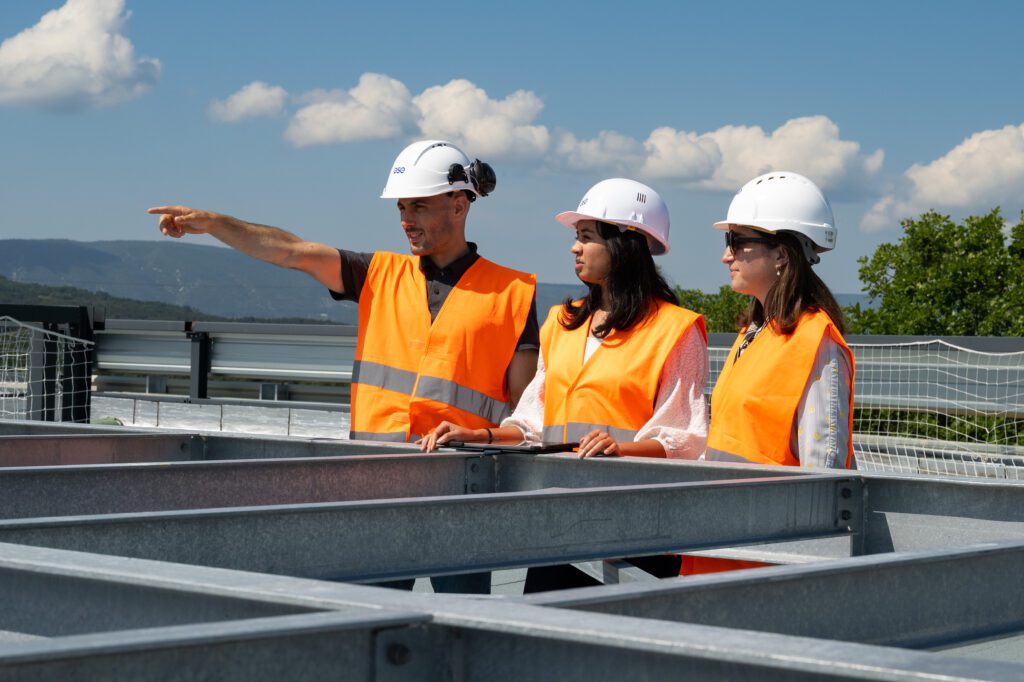
All these materials are customised to reflect the specific risk profile of each site and Clients’ requirements. This bespoke approach ensures optimal awareness-raising that is tailored to the realities of each project.
The safety induction is intended for everyone who accesses a site, without exception. It is aimed at visitors, site workers, subcontractors and service providers, and even our clients, to inform them of safety practices on their own site.
These awareness-raising tools, combined with an inclusive approach, help to create a safe and collaborative working environment where everyone plays a part in risk prevention.
Good practice on a building site
To ensure everyone’s safety, everyone on site must:
- follow the instructions set out in the safety management system known as VADEMECUM
- comply with the rules explained during the safety induction
- wear the required personal protective equipment (PPE)
- report any hazardous situations or anomalies they notice
- arrange visits in advance and adhere to the agreed timetables
- check the information board and safety information regularly.
Penalties for non-compliance with safety rules and standards
Criminal and administrative accountability
Failure to comply with safety standards can have serious consequences for the company and its managers, including:
- financial penalties (fines, suspension of works)
- a formal notice or even a prison sentence in the event of serious accidents.
Safety: a shared responsibility
At GSE, there is a strong belief that safety is everyone’s responsibility. Through a structured safety induction programme and by engaging with every staff member, worker and partner, it sets the conditions necessary to carry out our projects to the highest safety standards.

