

A construction site produces on average 40 kg of waste / m²
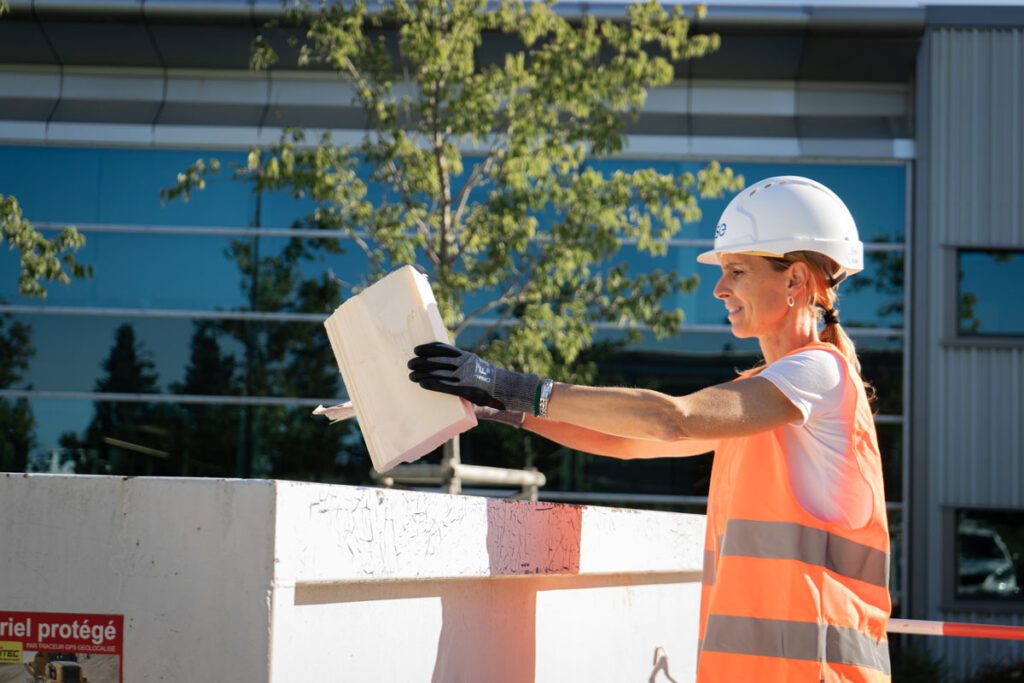
The construction industry is one of the largest producers of waste. In France, it generates some 42 million tonnes of waste per year. 75% is inert, 23% non-hazardous and 2% hazardous waste
Even when applying best practices and low-impact techniques, a construction site still generates an average of 40 kg of waste for every square meter built. This figure highlights the challenges and opportunities for transitioning to more responsible & sustainable construction methods
A striking – and alarming – figure
At an average of 40 kg of waste per square meter, a 1,000 m² building alone generates 40 tonnes of waste. And this figure does not take into account the surpluses caused by inefficient management, mistakes and unforeseen events on the construction site.
The waste comes in various forms, including:
- Material scraps: wood, plaster, tiles, etc.
- Packaging: plastic, cardboard, pallets, etc.
- Inert waste: rubble, concrete, soil.
- Hazardous waste: paint, solvents, sometimes asbestos.
Even with a rigorous logistical organisation, it is difficult to completely avoid producing waste. Our goal must be to reduce its volume and make better use of it.
Waste reduction & management: the regulatory measures in place
EU and national authorities have adopted a series of regulations to reduce the amount of waste and optimise its collection and processing. These include:
- The Corporate Sustainability Reporting Directive (CSRD, 2022) sets specific waste reduction targets and imposes transparency and reporting obligations on companies.
- Extended Producer Responsibility (EPR waste, 2022): this system, based on the “polluter pays” principle, aims to make organisations responsible for their waste management. It encourages effective sorting in order to reduce costs for construction companies while promoting the recovery of collected materials.
These regulations mark a key step in accelerating the transition to more sustainable & responsible waste management in the construction sector.
What is “good housekeeping” on a construction site?
A low-environmental-impact construction site is characterised by efficient organisation and a commitment to respecting the environment. It is based on rigorous “good housekeeping” practices, which include, in terms of environmental performance:
- Selective sorting of waste directly on site
- Reducing packaging at source
- Limiting material loss and waste
- Preventing environmental nuisances: reducing noise and dust, and preventing soil pollution
- Raising awareness of proper waste management & sorting practices and of environmental compliance (energy and water conservation, storage of hazardous products, site cleanliness, etc.)
Initiatives such as a ”good housekeeping code” or in house charter provide a framework for these efforts. However, despite these efforts, it is important to note that waste production cannot be completely eliminated. Good housekeeping mitigates environmental impacts, but cannot eliminate them.
Why is it imperative to reduce waste?
Reducing construction waste is a key issue for several reasons. It will:
- Reduce costs associated with waste treatment and transport
- Reduce the overall environmental impact of buildings
- Strengthen the industry’s image by promoting a responsible and innovative practices, while complying with current regulations (including RE2020, the circular economy, etc.).
- Comply with current regulations and anticipate future regulatory developments.
Faced with stricter environmental standards and growing pressure on natural resources, the construction industry must accelerate its transition to a more sustainable and frugal model. This shift towards a more sober approach is not only essential to protect the environment, but also to ensure the sector’s competitiveness and future.
How does GSE organise waste management & optimisation on its construction sites?
GSE manages waste on its construction sites based on rigorous planning right from the preparatory phase. To this end, we develop a waste organisation and management plan (SOGED in French) that lays out the methods for collecting & processing waste.
GSE has set itself an ambitious target: a minimum recovery rate of 85%, with a focus on maximising material recovery rather than energy recovery. This target is based on effective waste sorting at source by our contractors.
This is why we raise awareness among those working on our construction sites, through clear signage, training (including the “Green 15 Minutes”) and daily monitoring on site.
The waste sorting area is designed according to the stages of the construction project (phasing) and the type of waste generated. It is equipped with the following facilities:
- Skip for inert materials and rubble: concrete, mortar, bricks, tiles, ceramics, insulation, etc.
- Skip for non-hazardous industrial waste
- Skip for wood
- Covered skip for paper and cardboard
- Skip for metals
- Skip for plaster waste: plasterboard, honeycomb partitions, slabs and tiles.
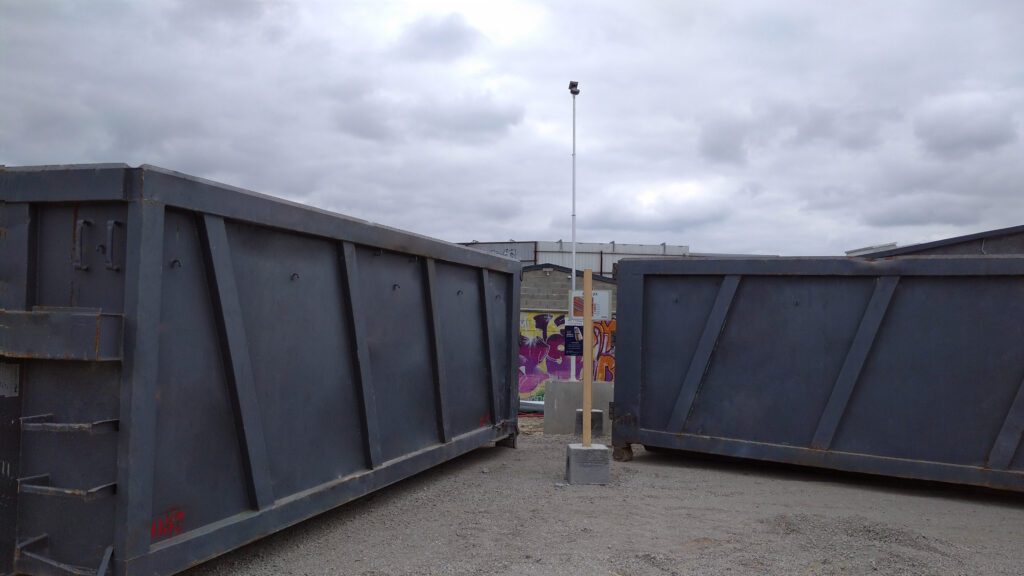
To ensure the best management, each skip is clearly identified by signage indicating the waste category, with associated pictograms. In addition, skips are always arranged in the same order to make them easier for on-site teams to locate, simplifying the adoption of best practices.
A dedicated area must be identified on the Site Plan (and all its updates).
This structured system helps to mitigate environmental impact by promoting recycling and material recovery.
How can you guarantee effective waste management?
GSE guarantees the complete traceability of the waste produced on its construction sites – whether regulated or not – and provides proof of its final destination. This traceability is achieved in particular through waste transfer notes and strict regulatory compliance.
Before the works
A preliminary estimate must be made to assess the qualities and quantities of waste, based on its type and the contracts involved. This analysis enables us to plan for the waste’s management and define a disposal strategy for each phase of the project. It applies to all categories of waste:
- Hazardous waste
- Inert waste
- Industrial non-hazardous waste
- Packaging waste
- etc.
The results of this assessment must be included into the waste organisation and management plan (SOGED).
Regular monitoring and updating
To ensure rigorous waste monitoring, the construction site’s Environmental Manager, or an authorised service provider, must maintain monthly records including:
- Waste transfer notes / traceability
These notes must be collected for 100% of waste – whether regulated or not. They must contain at least: the contact details of the contractors involved, the date of transport, the type and quantity of waste, information about the storage or treatment centre (address and type of facility), the type and rate of waste recovery, and whether the skip was accepted or refused by the service provider. - A summary table / reporting
This table details the quantities and volumes of disposed waste by type, with the corresponding collection dates and recovery rates achieved. The table is systematically updated for each environmental meeting, and at least once a month.
This system not only ensures regulatory compliance, but also accurately tracks the environmental impact of construction sites, while optimising recycling & recovery performance.
Simplifying waste management and traceability on our construction sites
For easier management and improved waste traceability on construction sites, GSE has adopted innovative digital tools. These solutions enable real-time tracking of waste by type and provide accurate indicators of recovery rates – both in terms of material and energy.
In addition, these tools select the most suitable and closest service providers, taking into account both business and quality criteria. This improves management while minimising the environmental impact of transport.
These systems can also produce detailed reports, both at the site level and for all GSE projects. This provides reliable and consolidated indicators, which are essential for continuously improving our waste management practices.

Recycling and recovery goals
Waste recovery is one of the key challenges currently facing the construction industry. In France, roughly 70% of construction and public works waste is recovered (through reuse, recycling or energy recovery). However, this average figure hides significant differences between the various categories of waste: inert, non-hazardous and hazardous.
Encouraging initiatives are beginning to emerge – such as the reuse of materials (doors, partitions, light fixtures, etc.) and the development of local recycling channels. Although they offer promising alternatives, these practices are still limited to a minority of projects.
As part of our renovation projects, we carry out an assessment of available resources to identify and promote opportunities for reusable materials. For new buildings, we prioritise recovered products, particularly for finishing touches.
This approach is part of The Blue Suite® offering, a flexible set of solutions that goes beyond traditional green goals to rethink sustainability in a broader sense.
The Blue Suite® takes a holistic approach to buildings by including:
- Ambitious environmental objectives
- Principles of corporate social responsibility (CSR)
- A focus on user wellbeing and respect for nature
- A guarantee of business viability at every stage.
Blue Suite® buildings incorporate solutions that reduce their environmental impact throughout their entire life cycle, from design to operation. This innovative vision enables us to combine sustainability, responsibility and performance in each of our operations.
- Reduce the overall environmental impact of buildings
- Strengthen the industry’s image by promoting a responsible and innovative practices, while complying with current regulations (including RE2020, the circular economy, etc.).
- Comply with current regulations and anticipate future regulatory developments.
Faced with stricter environmental standards and growing pressure on natural resources, the construction industry must accelerate its transition to a more sustainable and frugal model. This shift towards a more sober approach is not only essential to protect the environment, but also to ensure the sector’s competitiveness and future.
40 kg of waste/m²: time to act!
Even on a construction site that complies with “low environmental impact” standards, the figure of 40 kg of waste produced per square meter built is a real wake-up call. It highlights the urgent need to take action and reduce the construction industry’s environmental footprint. All players must heed the call: builders, project owners, architects, construction companies and even materials manufacturers. Each has a key role to play in this transition.
Adopting optimised waste management does not start at the construction phase. It requires designing differently, building smartly and rethinking the building as a whole, taking sustainable approaches from the earliest stages of the project. Reducing waste means inventing a more responsible way of building that is better suited to today’s environmental challenges.

