
GWR 3 low-carbon concrete: a revolution in the making
Faced with current climate challenges, the construction sector is accelerating its transition toward more responsible and sustainable practices. Among the identified drivers, reducing the carbon footprint of construction materials—particularly concrete—plays a central role.
It is in this context that a major step forward is needed: the introduction of GWR (Global Warming Reduction) classes of materials in 2025. This new regulatory framework aims to standardize and measure the carbon footprint of concrete, thereby addressing environmental challenges while ensuring technical performance.
In this article, we explore the implications of this development for the industry and highlight GSE’s commitment to implementing concrete solutions to achieve its decarbonization goals.
A new milestone for low-carbon concrete in 2025
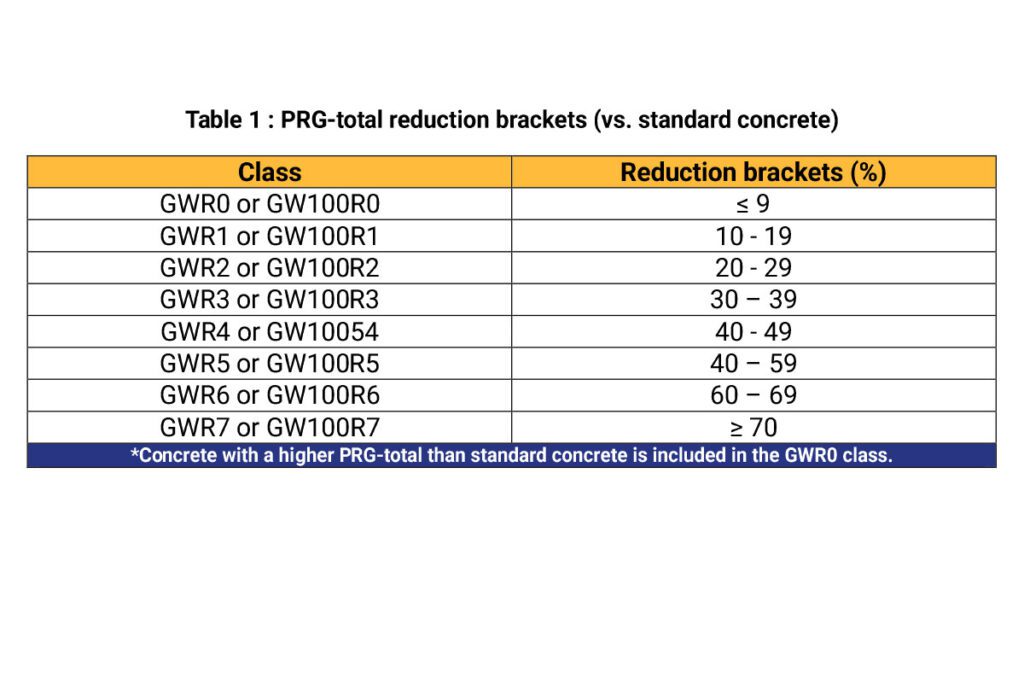
In 2025, France’s concrete reached a milestone with the revision of the national supplement to standard NF EN 206/CN in Eco-design of Concrete Structures – Part 2: Specification of Concrete for Low-Carbon Impact Works (document AFNOR FD P18-483-2). This development saw the introduction of the GWR (Global Warming Reduction) classes, a new classification system designed to define and regulate concrete’s carbon footprint.
Until now, the concepts of “low-carbon concrete” and “ultra-low-carbon concrete” were often vague, based on different approaches. The GWR classes are a game-changer, introducing a common framework based on a measurable criterion: the Global Warming Potential (GWP).
A standardised framework for comparison and specification
Clarity & transparency
The aim of the GWR classification is to enable an objective comparison of concrete, based on measurable environmental data relative to a common benchmark.
These new classes complement and build upon the current technical criteria to take into account the specific usage requirements:
- Concrete strength classes refer to its ability to withstand mechanical loads without deforming or failing. This is a measure of its compressive strength, which is one of concrete’s primary structural properties. This strength is essential for ensuring the safety and durability of built structures. The strength classes remain the same, but the higher the concrete’s strength, the higher the reference value for the global warming potential (GWP).
- Exposure classes define the environmental conditions to which concrete is likely to be exposed over its service life, in order to ensure its durability and resistance to external aggressions. In other words, these classes indicate the level of protection required for concrete to effectively withstand environmental stresses (corrosion, freezing, chemical erosion, etc.). Exposure classes continue to play their role by taking environmental stresses (corrosion, chemical erosion) into account, with a slight adjustment to GWP values to adapt to these contexts
Therefore, the GWR grades simply add a measured environmental factor to concrete’s standard specifications.
A common language for all stakeholders
This enrichment of the standard introduces a common reference framework that is easy to use, because it is integrated directly into BETie, the platform for generating Environmental Data Sheets (FDES) for in-situ concrete. This means that all stakeholders in the concrete industry can find out how their product is classified in just a few clicks, whether it is defined on the basis of a reference sheet or a specific formulation. Suppliers of precast concrete are also tending to incorporate this classification into their own configurators to make their product ranges clearer.
This classification thereby provides a common language for all stakeholders in the industry: specifiers, design consultancies, manufacturers and contractors.
A key part of the low-carbon transition
Supporting national targets
This development is in line with the objectives of France’s National Low-Carbon Strategy (SNBC 3) and is intended to complement the requirements of the 2020 Environmental Regulation (RE2020). The GWR classes introduce an intermediate level of analysis – that of the material itself – in order to inform projects’ design & build choices.
A practical tool for making responsible choices
Thanks to this classification, it is now possible to formulate and specify several types of concrete with identical levels of structural performance, but with a known & controlled carbon footprint. This development promotes:
- More rigorous engineering
- The better visibility of projects
- The greater credibility of environmental initiatives
GSE’s commitment: to minimise concrete-related carbon
A practical strategy for low-carbon concrete
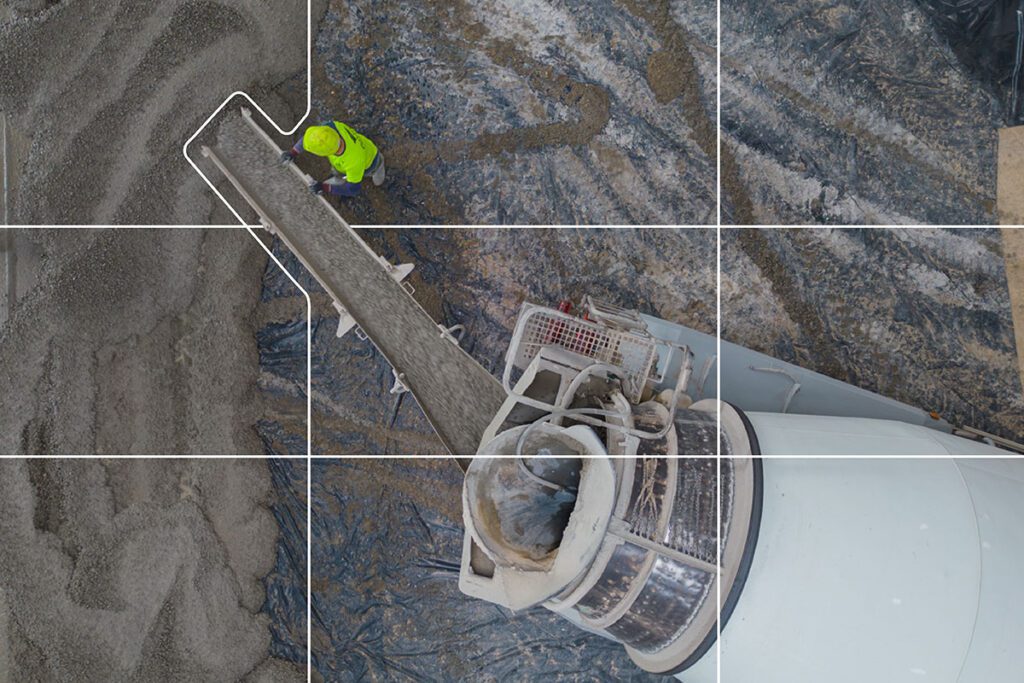
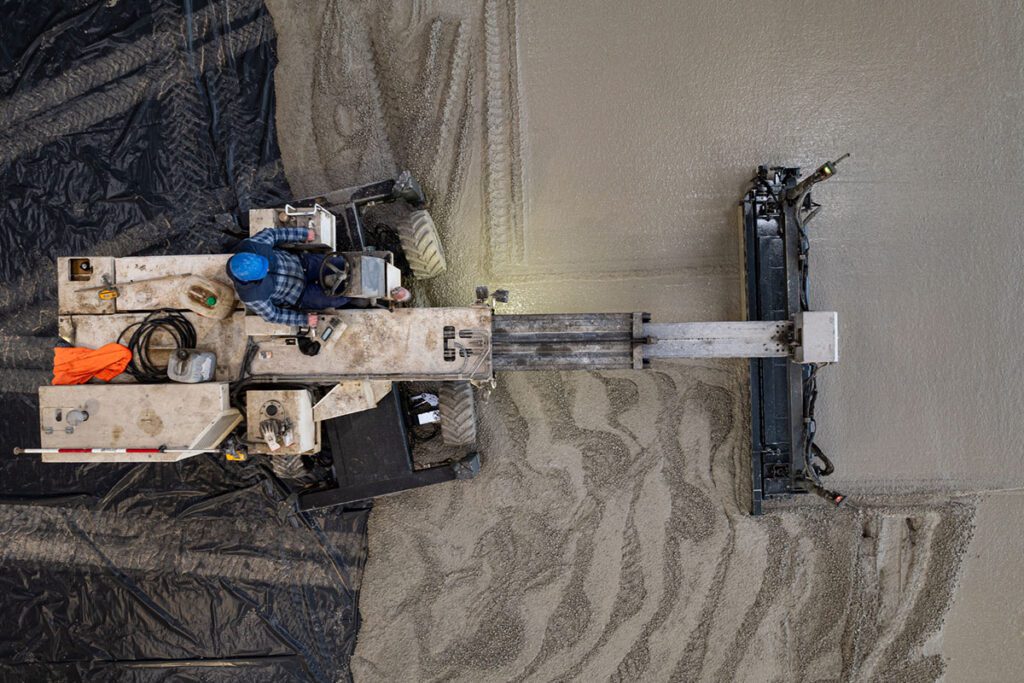
GSE proactively incorporate low-carbon concrete into most of our projects. This initiative began in 2023 with floor slabs, without adding any costs for the Clients. The approach is based in particular on the use of CEM III/A and CEM III/B cements, enabling GSE to achieve GWR 3 class concrete or higher.
GSE is now expanding this strategy to foundations. We have partnered with Hoffmann Green to use GWR 5-class concrete for 15,000 m³ of foundations in 2026.

Significant results and measurable carbon savings already
GSE’s efforts are yielding tangible results:
- 75% of our projects now have paving that meets the GWR 3 standard
- Our target for 2030: GWR 3 class or higher for all concrete parts, across all the projects.
The environmental benefits are already clear:
- Up to -2.8% emissions (in kgCO₂e/m²) across the building’s total environmental footprint with GWR3 slabs (-19% on the paving)
- Approximately -0.4% of the building’s total environmental footprint with GWR3 foundations (-29% on the foundations).
These results demonstrate that accessible technical solutions are already available to reduce the environmental impact of buildings, without compromising on performance or cost.
Supporting regional development objectives
Responsible procurement and the circular economy
At GSE, efforts to reduce the environmental impact of construction sites go beyond the choice of materials. This is reflected in a responsible procurement policy that prioritizes short supply chains, in which concrete components play a key role due to the proximity of concrete production plants. The AFNOR FD P18-483-2 (French classification of norms) guideline also promotes the use of recycled aggregates by increasing the Global Warming Potential (GWP) values of base concrete by 10 kgCO₂eq/m³.
This commitment aligns with GSE’s status as a purpose-driven company under French law with ambitious goals such as expanding local procurement to reduce transportation-related emissions and contributing to a circular economy while supporting local economic players.
Towards a new market standard
The introduction of GWR classes marks a major shift for the concrete sector. By providing a clear, measurable and shared framework, this standard aligns the industry’s practices with global climate ambitions.
More than a technical tool, the GWR classes amount to a genuine transformation of design & build methods, by placing environmental performance on a par with technical performance. It’s a paradigm shift, essential for sustainable and responsible construction.