

Expanding a business without using more land
More activity on the same footprint: unrealistic requirement or new playbook?
In France, the zero net land take (ZAN) target is fundamentally reshaping companies’ development strategies. Faced with the growing scarcity of available land, the need to protect natural, agricultural and forested areas and to preserve zones of high ecological value, the real estate sector is forced to evolve.
It’s a tremendous challenge. Not only do companies need to produce and store more, they must also optimise every square metre of land they use. As processes are increasingly industrialised and e-commerce continues to skyrocket, the key question today is: how can we do more with less land?
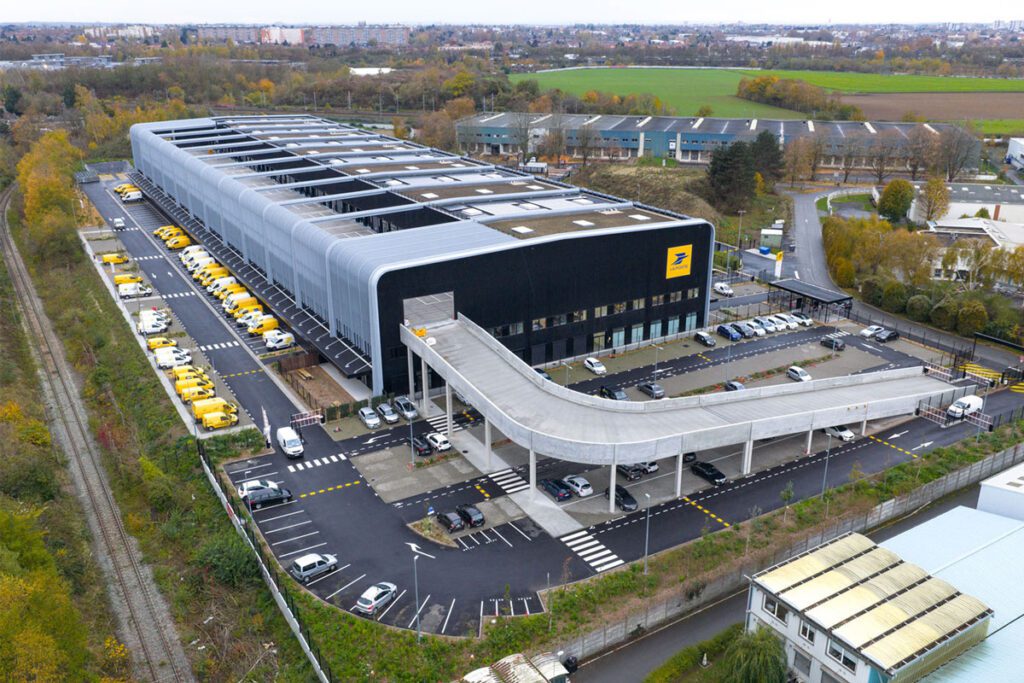
Optimised density: a major performance driver
Land-use density: at the heart of real estate strategies
Density is a key concept in urban planning. At the plot level, it refers to the intensity of coverage, as measured by the land-use ratio. Optimising density is no longer just a matter of calculating the floor space, but of measuring the value and potential generated by each available square metre.
Investing in land-use optimisation enables businesses to maximise their real estate’s productivity, reduce their environmental footprint and improve their assets’ profitability. This paradigm shift is crucial to addressing current constraints and remaining competitive in the future.
Real estate solutions that combine growth and land use efficiency
To tackle these challenges, various innovative solutions help us reconcile business development with resource conservation.
1. It already exists? Invent it!
Step 1 is to make the most of existing real estate – rather than expand onto undeveloped land. Approaches include:
- Renovating ageing sites
- Requalifying obsolete assets
- Repurposing brownfield sites
These approaches deliver several significant benefits. First, they significantly reduce land take by reusing already developed land. This creates value by utilising existing sites, while helping to revitalise neglected space. It also simplifies administrative procedures by using land that has already been zoned and sealed, thereby reducing the complexities associated with planning permission and regulations.
2. Build different, build up
Multistorey buildings are another effective way to increase density. They offer many benefits:
- Multi-functional use (production, storage, parking)
- Increased usable space on a limited footprint
- Suited to urban areas where space is limited.
Multistorey construction is increasingly seen as a strategic lever, particularly in urban areas or in areas severely constrained by the lack of space.
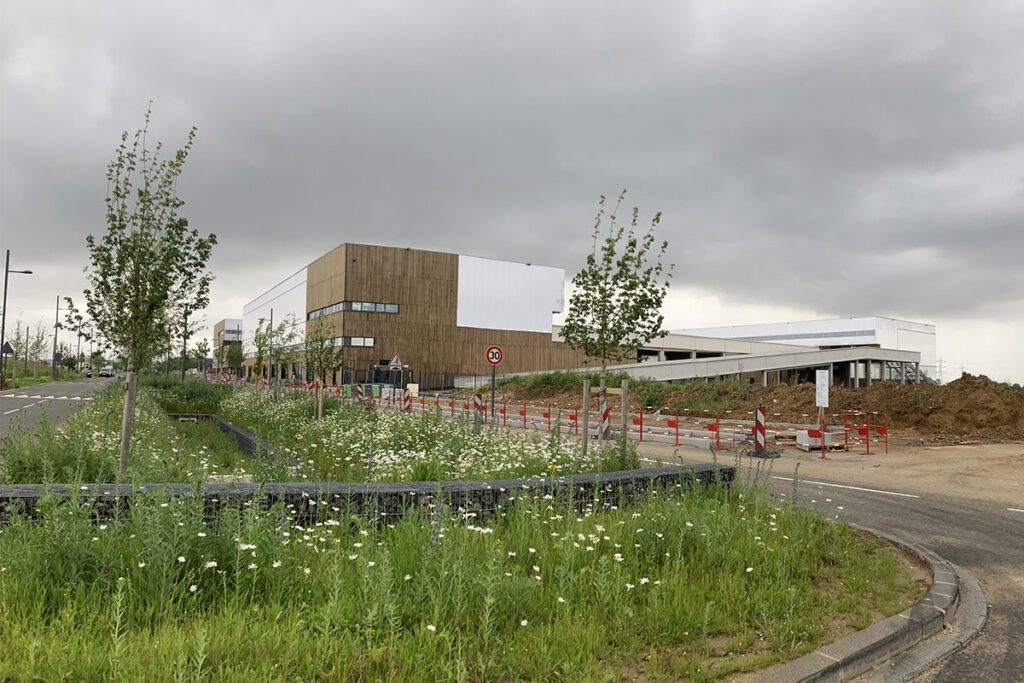
3. Turn brown into green
The shortage of land suitable for development has become a serious constraint, so the revitalisation of brownfield sites – sometimes called “wasteland” – can be an attractive alternative. Brownfield projects involve the redevelopment of derelict or obsolete urban space. They make better use of existing infrastructures than construction in natural or agricultural areas.
Such real estate projects tend to focus on each site’s specific environmental constraints. They support land-use efficiency, help to preserve ecological equilibria and play a significant part in the sustainable transformation of local economies.
Case study: a high-density urban logistics hub in Bondy, Greater Paris
In the Paris suburb of Bondy, GSE acted as AEW & Stonehedge’s general contractor to build a logistics hub in a high-density urban area.
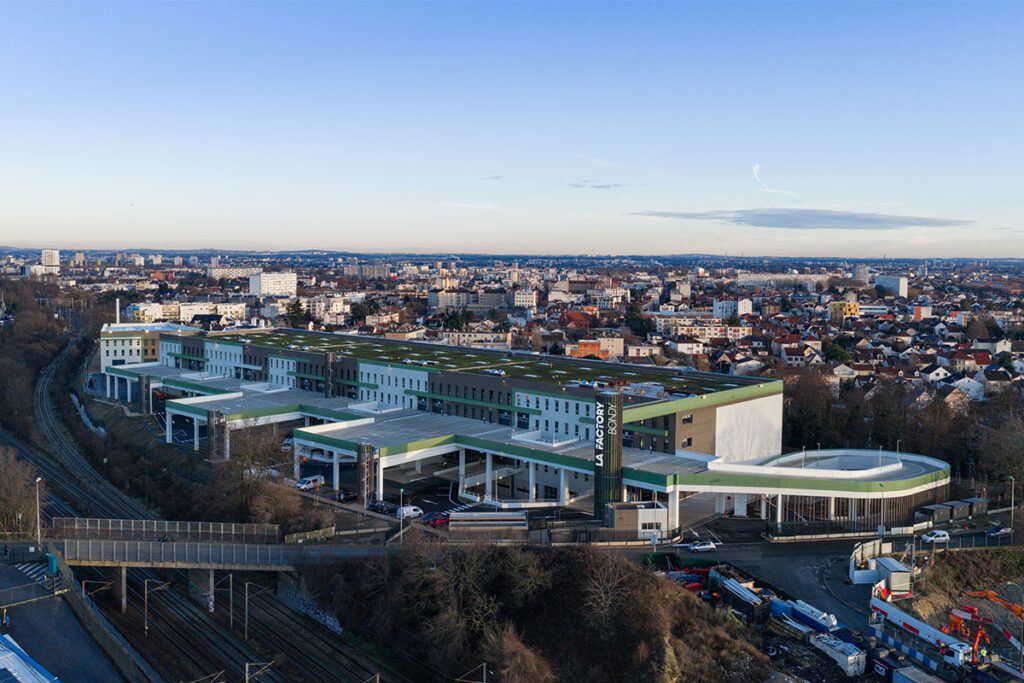
The aim was to roll out a high-performance logistics solution without taking up any additional land, in an area under significant urban pressure and subject to the zero net land take policy.
GSE’s strategy relied on several key elements. The project was based on brownfield requalification, making the best use of the existing developed plot and avoiding any further land take. The compact design aimed to optimise the facility both in terms of its layout and logistics flows. And the project focused on landscape and environmental integration, to ensure harmony with the surrounding urban fabric.
The challenge was to reconcile logistical performance with urban integration.
The project maximised usable floor space without expanding the site, enabling the facility to remain in its strategic location inside the city. The platform optimised last-mile logistics, always a key goal for stakeholders in the sector.
The project is a true showcase of land-efficient design. It illustrates a more compact approach to property development, better integrated into the local urban fabric and better suited to the challenges of our time.
Real estate strategies for a sustainable future
In the face of increasing pressures, real estate is becoming a key competitive advantage. The companies that succeed in setting themselves apart will be those that adopt a strategy combining:
- Smart, compact growth
- Facility requalification and brownfield redevelopment
- Innovation right from the design stage
- Combined economic & environmental performance.
GSE supports this transition with comprehensive solutions such as The Blue Suite®. Based on principles such as compact growth, carbon optimisation, operational performance and biodiversity, this approach redefines how smart & sustainable infrastructure is designed.
The days of conventional construction are over. We must now develop industrial and logistical assets that combine business performance with environmental responsibility.

